
How to organise a company kick-off in Paris: the guide to launching the year
Plenary, workshops, lunch, evening: how to organise a company kick-off in Paris for 20 to 60 people, build a programme that gets teams on board, and book the right venue in time for January.
The La Fabrique Générale team
Ask an AI to summarise this article
Click on your favourite AI for an instant summary
Every January, the same scene plays out in hundreds of companies. The CEO presents the year's targets to eighty people looking at their phones, slides scroll by in a windowless hotel room, and by 4pm part of the audience has already slipped away. The kick-off is supposed to launch the year. Badly built, it mostly launches the year's first pointless meeting.
Well built, it does the opposite: it is the one moment when the whole company hears the same thing at the same time, and leaves wanting to get going. Here is how to get the second outcome.
What a kick-off has to deliver
Before talking about venues, timings or catering, ask yourself one question: what should every participant know, and feel, on the way out? A good kick-off keeps three promises.
Understand. Where the company stands, where it is going this year, and why. Three priorities, not twelve. If a salesperson or a developer cannot repeat them at the coffee machine the next day, the message is overloaded.
Find your place. Each team needs to see how its own roadmap fits the shared direction. That is the job of workshops or team-by-team sessions, not of the plenary.
Reconnect. For many hybrid teams, the kick-off is one of the few days when everyone is physically in the same room. Informal time (coffee, lunch, the evening) is not a bonus: it is half the value of the day.
The format: full day, half day or evening?
The format depends less on your budget than on what you have to say.
The evening kick-off (6pm → 11pm). One hour of plenary early in the evening, then a standing dinner and party. The right format for companies under fifty people, or when the strategic groundwork has already been done by the leadership team. Its big advantage: it costs no working day.
The half day followed by an evening (2pm → 11pm). The most effective format from about thirty people upwards. Plenary in the early afternoon, workshops, a break, feedback, then the party straight after without changing venue. The energy of the plenary carries through to the first drink.
The full day (9am → 5pm, or into the night). Best kept for years of transformation: a new organisation, an acquisition, a change of strategy. It needs a solid programme, or the afternoon collapses.
One rule: if you are torn between two formats, choose the shorter one. Nobody ever complained about a kick-off being too tight.
A programme that holds the room
Here is the outline we see working best, over a half day followed by an evening.
- 1.30pm · Welcome, coffee. Thirty minutes for everyone to arrive, drop their coat and catch up with colleagues they usually only see on video calls.
- 2.00pm · Opening by leadership. Twenty minutes at most: last year in three figures, this year's three priorities, and what is expected of everyone.
- 2.20pm · Two or three short testimonies. A client, a team that delivered a standout project, a newcomer. Ten minutes each, not one more. This is what people will remember.
- 3.00pm · Small-group workshops. Each group works on a concrete question linked to the priorities. Mix departments: it is the best antidote to silos.
- 4.15pm · Break.
- 4.45pm · Workshop feedback, one minute per group, then an open Q&A with leadership.
- 5.30pm · Closing words and straight into the cocktail reception.
- 6.00pm → 11.00pm · Evening: standing dinner, open bar, entertainment.
The principle behind it all: alternate listening and doing every forty-five minutes. Beyond that, attention drops, however good the speaker.
Choosing the venue
A kick-off has specific needs that not every venue can meet.
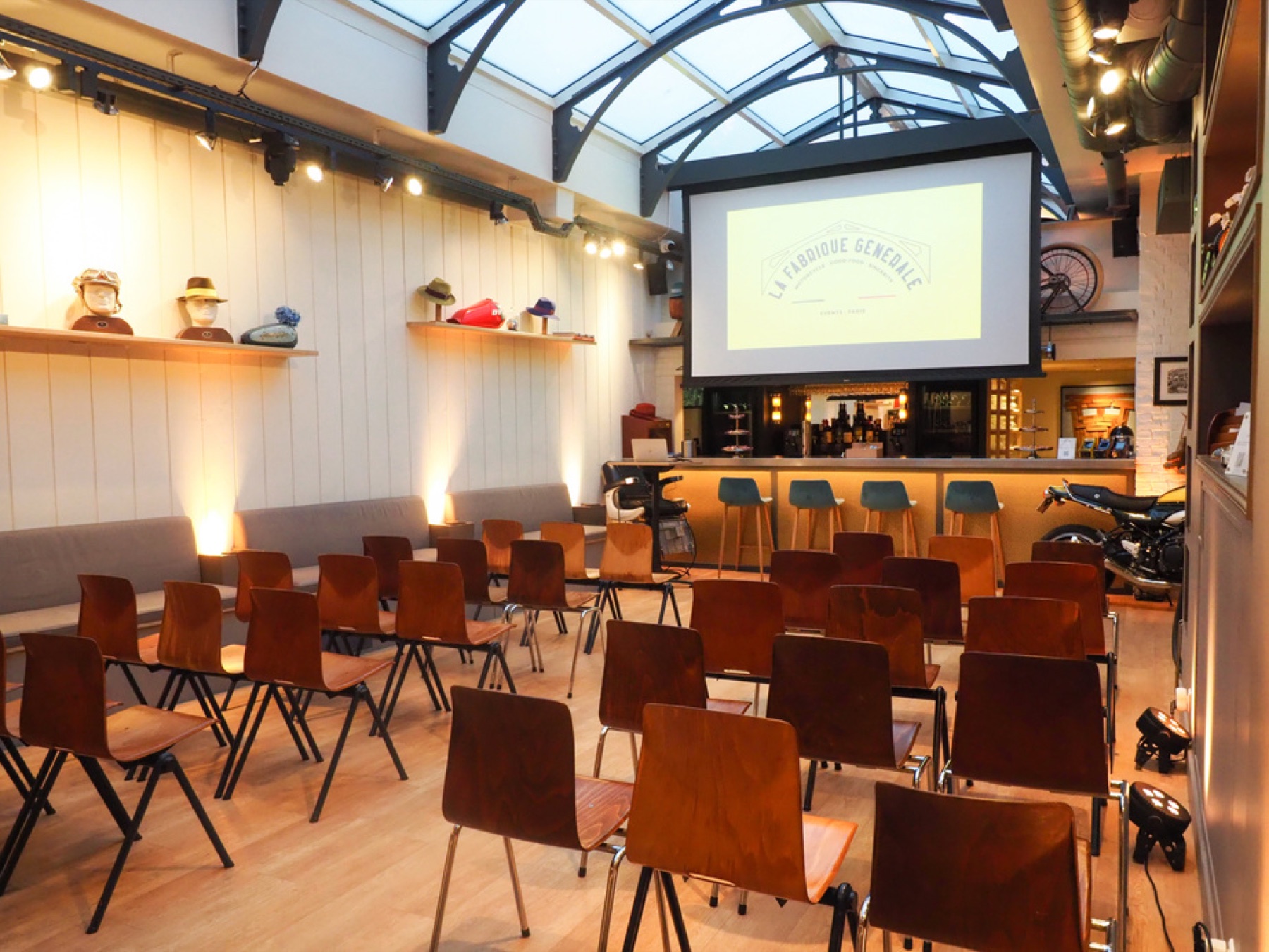
A plenary where everyone can see the screen. Theatre or cabaret layout (round tables), a screen or projector readable from the back row, microphone and sound system. Test the tech the day before, not on the morning itself.
Spaces for workshops. Running six groups in the plenary room is possible, but noisy. One or two side rooms change the quality of the discussions.
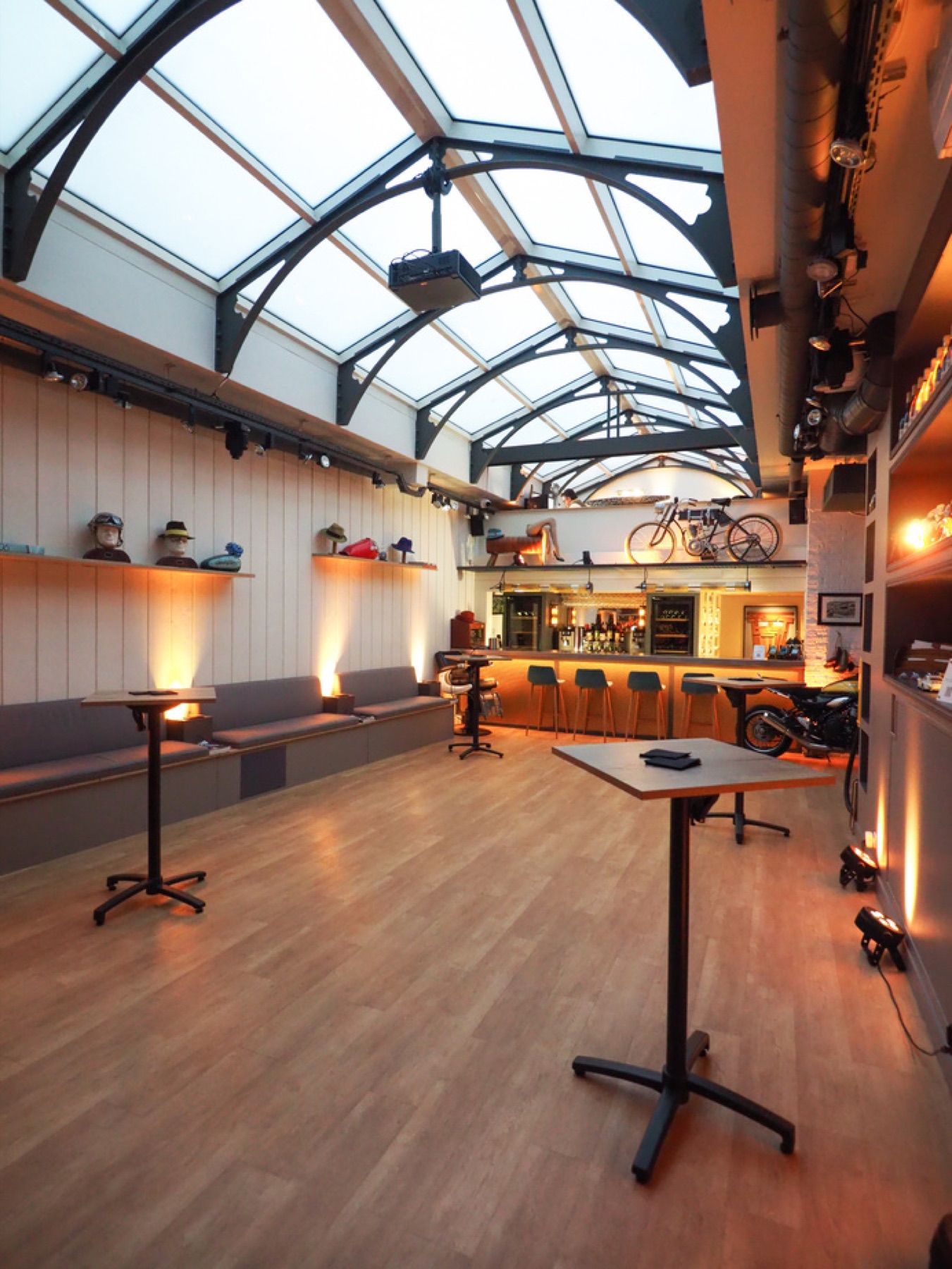
Switching to the evening without moving. This is the most underestimated point. Changing venue between the plenary and the party means losing an hour, some of your participants and the collective momentum. A venue that turns from plenary to cocktail layout during the break keeps everyone together.
A venue that makes a statement. The kick-off is a message in itself. Holding it in an anonymous conference centre or in a place with history and character does not say the same thing about the year ahead. Our guide to unique venues in Paris sets out the criteria for choosing well.
Exclusive hire. A kick-off happens behind closed doors: figures, organisation, upcoming projects. No other group should share the venue that day.
The classic mistakes
The slide marathon. Eight directors, twenty-five minutes each, two hundred slides in total. The room switches off by the third presentation. Impose a short, common format on every speaker, and hold a dress rehearsal.
Questions left unanswered. The Q&A with leadership is often the most anticipated moment. If it gets squeezed for lack of time, the message received is clear. Protect that slot in the programme.
Forgetting those who are not there. Colleagues in other regions, abroad or on leave: plan a recording or replay of the plenary, and a written summary sent the next day.
An evening with no transition. Going from a workshop to an open bar without closing words leaves the day without an ending. Two minutes to thank everyone and restate the direction are enough.
When to book?
This is the real difficulty of the kick-off: everyone wants the same week. The last two weeks of January and the first week of February are the busiest of the year, right after the end-of-year party season.
For a January kick-off, book your venue in October or November. By December, what is left is mostly mid-week dates or February. Block the date in everyone's calendar as soon as the venue is confirmed: a kick-off with 30% absentees has missed part of its purpose.
In short
A successful kick-off comes down to three things: a message reduced to three priorities, a programme that alternates listening and doing, and a venue that lets you move from plenary to workshops to party without anyone having to go anywhere.
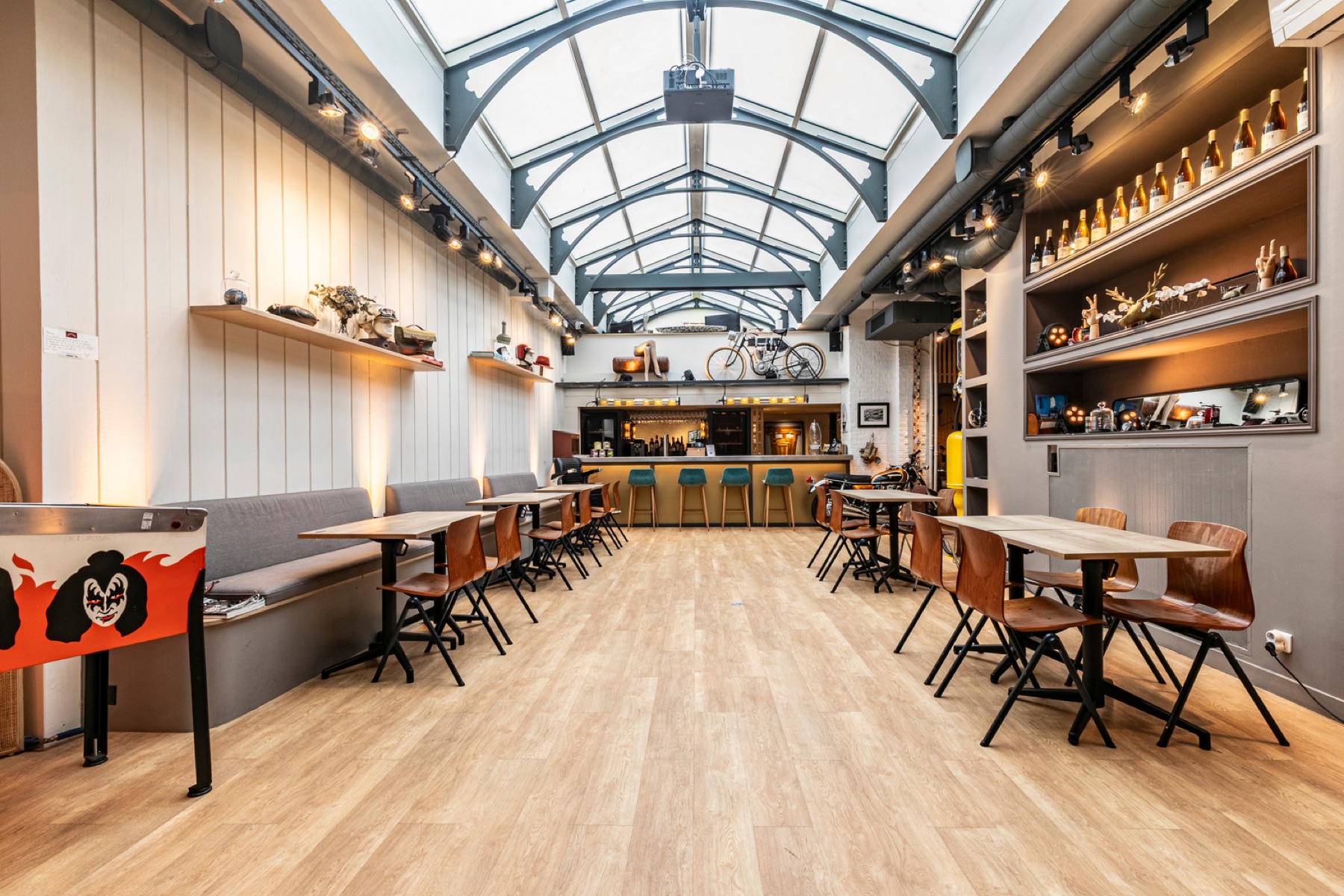
At La Fabrique Générale, the Verrière hosts up to 60 people in plenary layout, the Salon and side spaces are used for workshops, and the same Verrière is transformed during the break for the evening, with up to 150 guests, home-made food and an open bar. Tell us about your kick-off: we reply within 24 hours with a clear quote.
Further reading
 Practical guide
Corporate standing dinner: how many canapés per guest, and how to get the evening right
Canapés per guest, savoury and sweet balance, drinks, service, running order: the practical guide to organising a corporate standing dinner in Paris where nobody goes home hungry.
Practical guideRoom hire in Paris 17th: the guide to finding the right space (meeting, seminar, party)
Meeting room, seminar room, function room: how to hire a space in the 17th arrondissement of Paris for your format, what should be included, and why a "room" is rarely what you actually need.
 Practical guide
Hiring a venue in Paris: how to read a quote (and spot the hidden costs)
Dry hire or all inclusive, minimum spend, overtime, cleaning, staff: the guide to comparing venue hire quotes in Paris on the same basis, and avoiding the surprise invoice.