
Hiring a venue in Paris: how to read a quote (and spot the hidden costs)
Dry hire or all inclusive, minimum spend, overtime, cleaning, staff: the guide to comparing venue hire quotes in Paris on the same basis, and avoiding the surprise invoice.
The La Fabrique Générale team
Ask an AI to summarise this article
Click on your favourite AI for an instant summary
Three quotes on the table, three totals ranging from one to double, and one certainty: they aren't talking about the same thing. That's the situation of every organiser looking for a venue to hire in Paris for a corporate event. The cheapest quote is almost never the one that will cost the least. It's simply the one that left the most out.
This guide teaches you to read a venue hire quote line by line, to put three proposals back on the same basis, and to ask the five questions that separate a budget held from a surprise invoice.
The two pricing logics
Every venue quote belongs to one of two families, and you need to identify which before comparing anything.
Dry hire. The venue rents you its walls, by the hour or by the day. Everything else, catering, drinks, staff, AV, furniture, cleaning, is added on top, often through imposed or "approved" suppliers. The headline figure is low; the final figure is not. This logic suits agencies that produce everything themselves. For a company organising directly, it turns the organiser into the project manager of six suppliers.
All inclusive, per person. The venue sells you a complete service: exclusive hire, food, drinks, staff, basic AV, in a per-guest rate. The headline figure is higher, but it's the final figure. Comparison is immediate, and the risk of overspend is close to nil.
Between the two lies a grey area: hire "with options", where every line of the quote points to a possible supplement. That's where most nasty surprises are born.
The 9 lines to check on every quote
Take each quote and look for these nine items. If they aren't there, ask in writing whether they are included, excluded or charged extra.
- Genuine exclusive hire. Does the quote cover the whole venue or one room? Can another event take place at the same time? This question conditions everything: the quiet, the bar, the toilets, the cloakroom.
- Staff. Number of servers, bartenders, event manager, and until what time. A reasonable norm is around one server for every twenty to twenty-five guests at a cocktail, one for every ten to twelve at a seated dinner. Below that, you'll be waiting for your drink.
- Drinks. Open bar, hourly package, tokens, or "on the meter"? A drinks package that stops at 10 pm on a party that ends at 1 am is a classic trap. Also check what the open bar covers: are cocktails and champagne in it, or only wine, beer and soft drinks?
- Food. Number of pieces per person at a cocktail (twelve savoury and four sweet make a dinner; six pieces make an aperitif), number of courses at a seated dinner, vegetarian and pork-free alternatives included or charged extra.
- AV. Sound system, microphones, projector, screen, lighting: included or rented? Is a technician present? The AV set-up discovered as an optional extra the day before is a great classic of the dry-hire quote.
- Hours. Access time for set-up, opening time for guests, end of service, cost of each extra hour. That last line is the one that makes the final invoice vary the most.
- Cleaning and reinstatement. Often billed separately on dry hire, sometimes as a flat fee, sometimes "depending on condition". Insist on a fixed amount.
- Security and cloakroom. Above a certain headcount, a security guard may be required. Is the cloakroom staffed?
- The guaranteed minimum. Many venues bill a minimum number of guests or a minimum spend. If your headcount drops from 80 to 60, do you pay for 80?
Excl. VAT, deposit, cancellation: the bottom of the quote
Once the lines are checked, read the end of the document, the part everyone skips.
- Excluding or including VAT? B2B quotes are excl. VAT. Check that all three proposals are, otherwise the comparison is off by 20%.
- The deposit. Between 30% and 50% on booking is the norm. A 100% deposit a month before the event deserves a question.
- Cancellation terms. Until what date can you cancel free of charge, and on what scale afterwards? Check the postponement clause too: an event moved by three weeks shouldn't cost you a cancellation.
- Adjustable headcount. Until when can you confirm the final number of guests? Seven days before is reasonable. Thirty days before, and you're the one carrying the risk.
- Validity period. A quote valid for ten days on a December date is a quote that's hurrying you. That isn't illegitimate, but be aware of it.
Putting three quotes back on the same basis
A simple method, in four columns on a spreadsheet:
- Go back through each quote and add, line by line, everything that isn't included: missing staff, likely overtime, AV, cleaning, drinks beyond the package.
- Add the organising time. A dry hire with five suppliers to coordinate easily represents three to five days' work for the person in charge. That time has a cost.
- Divide the corrected total by the number of guests actually expected, not the number invited. Out of 80 invitations, count on 60 to 65 attending.
- Compare the per-person rates you get. This is often the moment the "cheapest" quote drops to second or third place.
The five questions to ask before signing
In writing, preferably by email, to keep a record:
- "That evening, will there be another event in the venue?"
- "What happens at 11 pm if the party carries on, and how much does each extra hour cost?"
- "If we go from 80 to 60 guests ten days before, what do we pay?"
- "Is the staffing shown sufficient for this headcount, and who tops it up if not?"
- "What is the exhaustive list of what is not in this quote?"
The last question is the most useful. A venue that answers "nothing" in one line saves you a week. A venue that takes three days to reply has already given you a piece of information.
What a readable quote says
A good venue hire quote fits on one page. It states a date, a headcount, a schedule, a per-person rate, what it includes in five or six lines, and what it doesn't in one or two. It contains no "from", no asterisk, no reference to an annexed price list.
That's the format we've chosen, for a simple reason: our clients have to defend it in front of a finance director. With us, the seminar, the corporate party and the seated dinner are billed per person, all inclusive: the whole house, home cooking, drinks, staff, basic AV. The quote arrives within 24 hours, and the figure it announces is the figure on the invoice.
In short
Comparing venue hire quotes in Paris means first identifying their logic (dry hire or all inclusive), then checking nine lines (genuine exclusive hire, staff, drinks, food, AV, hours, cleaning, security, guaranteed minimum), then reading the small print (VAT, deposit, cancellation, adjustable headcount). The rest is a division: corrected total over guests attending.
If you'd like an honest point of comparison for your next event, tell us about it: you'll receive a one-page quote, with no asterisk.
Further reading
 Practical guide
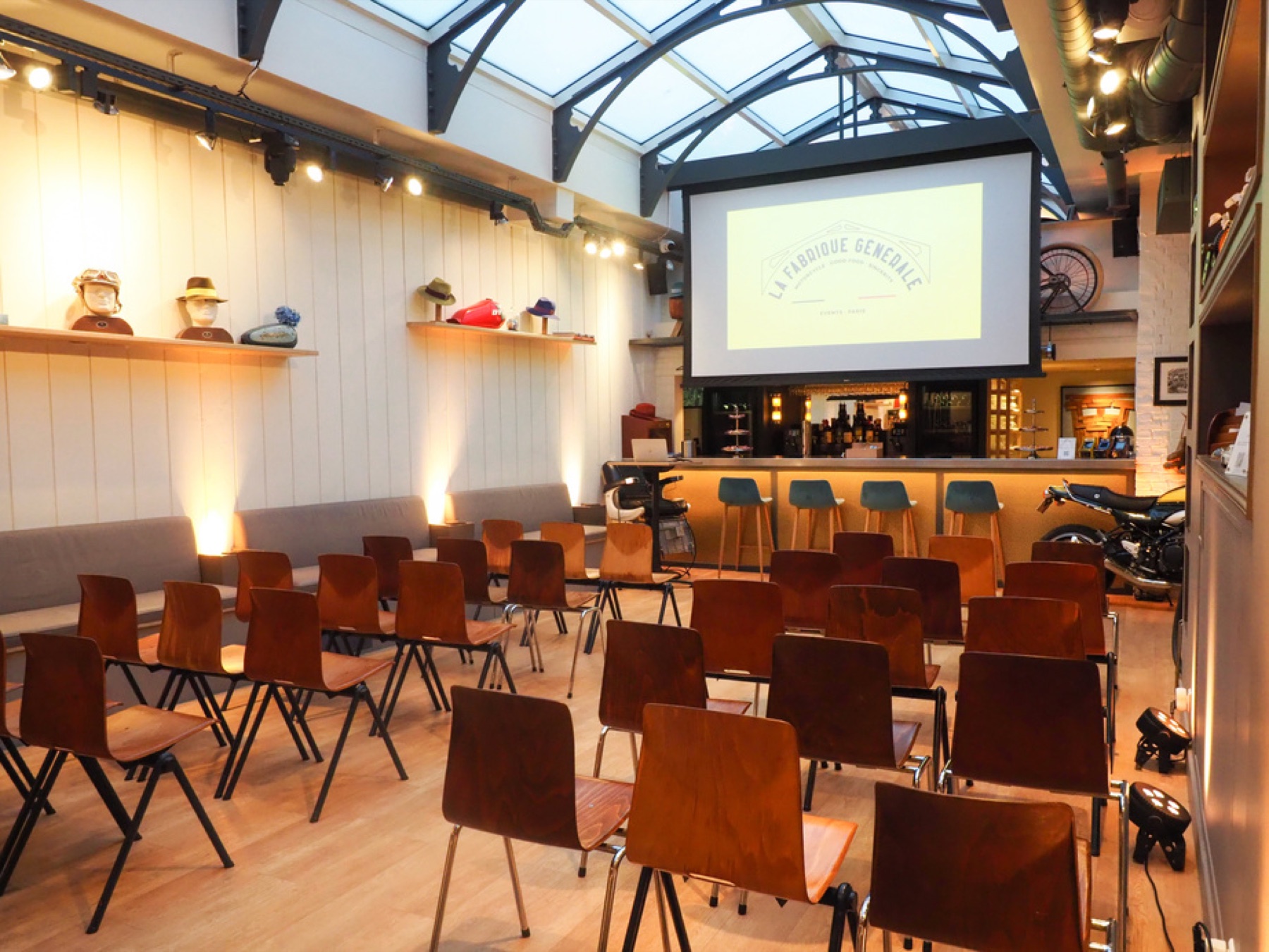
Room hire in Paris 17th: the guide to finding the right space (meeting, seminar, party)
Meeting room, seminar room, function room: how to hire a space in the 17th arrondissement of Paris for your format, what should be included, and why a "room" is rarely what you actually need.
 Ideas & inspiration
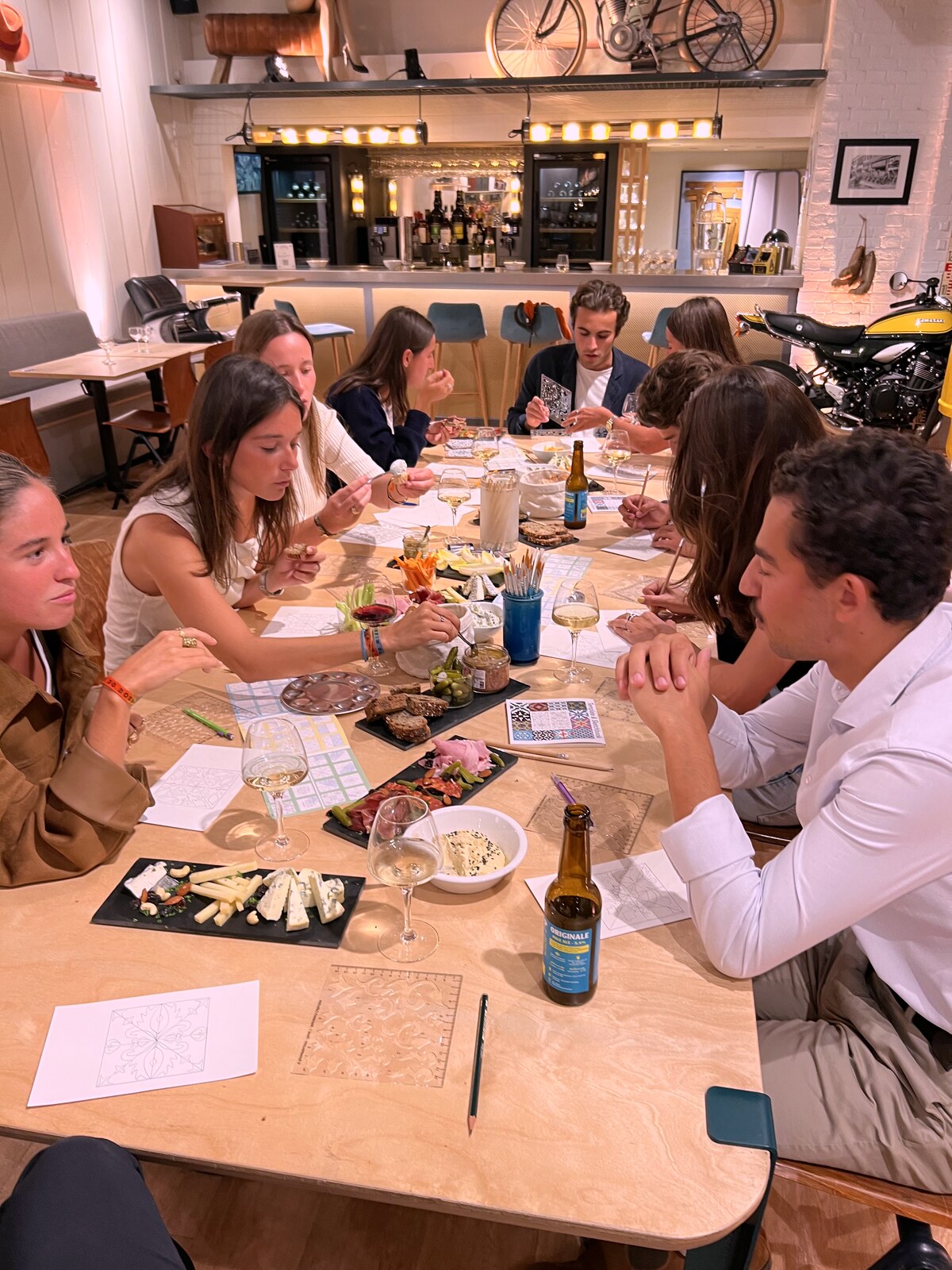
Team building in Paris: 7 indoor formats that work all year round
Half-day, hybrid day, after-work challenge, podcast workshop… The indoor team-building formats that genuinely build cohesion in Paris, and how to put them together without turning the day into summer camp.
 Practical guide
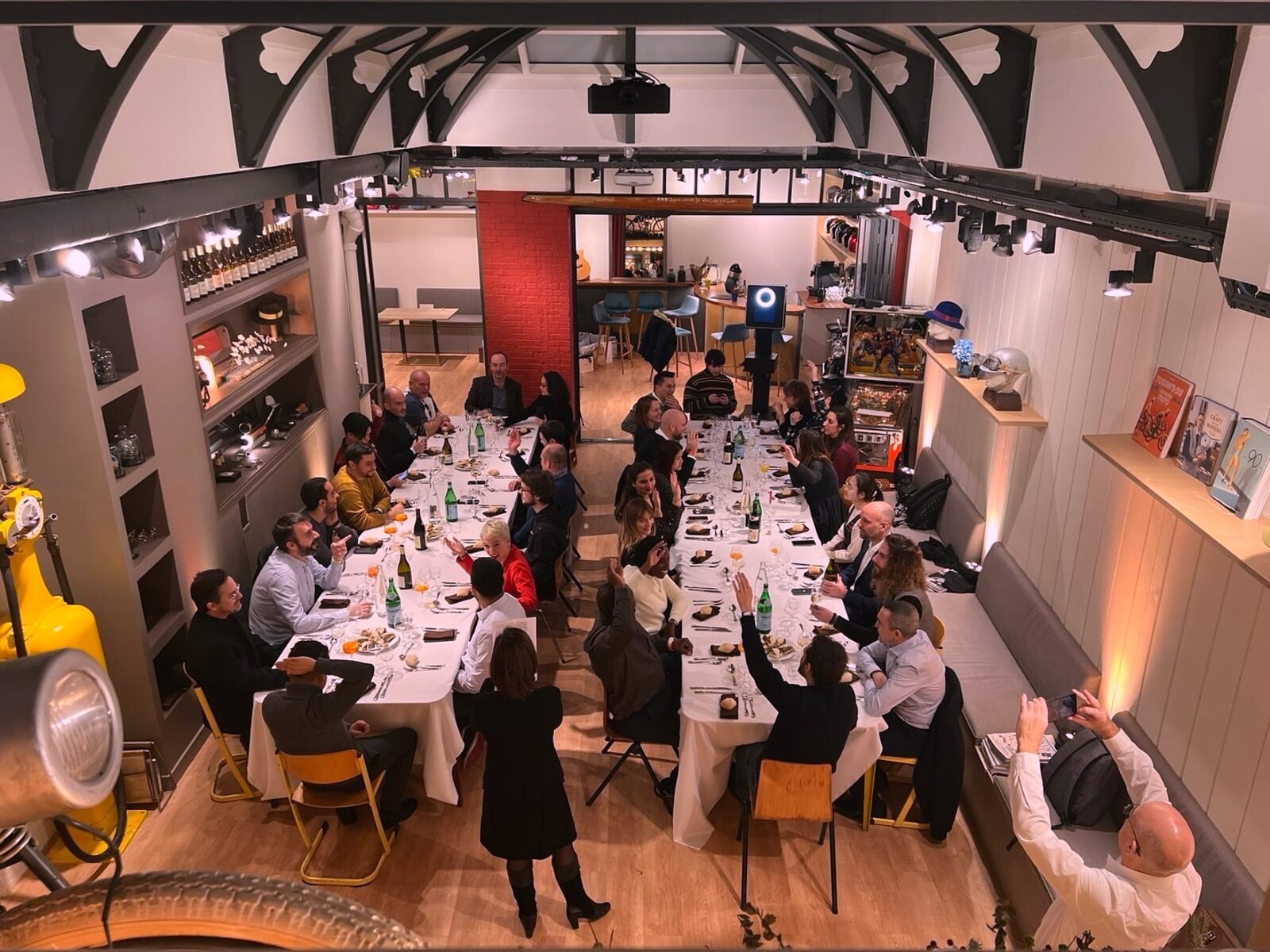
Organising a corporate dinner in Paris: the guide to a proper table
Executive committee, client dinner, team meal: how to organise a corporate dinner in Paris for 8 to 30 covers, choose between a restaurant and an exclusively hired venue, and build a menu everyone agrees on.